

[Discussion Points] Addressing AMR Measures for an Era of Healthy Longevity: Ensuring Safety and Security for Older Adults in a Super-Aged Society (October 23, 2026)
date : 10/23/2026
Tags: AMR

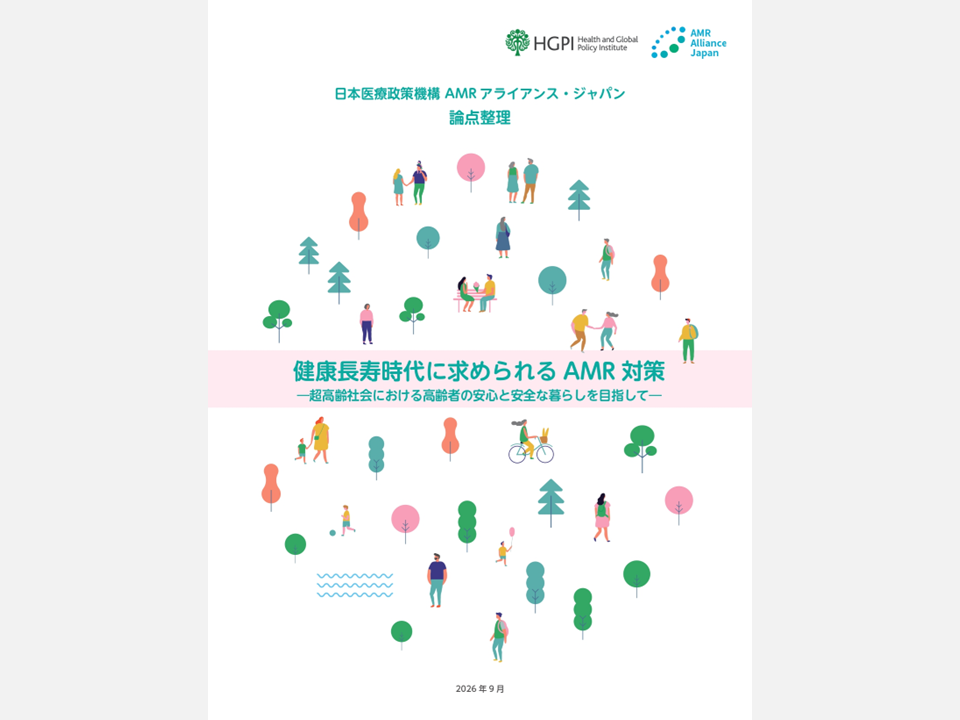
AMR Alliance Japan (Secretariat: Health and Global Policy Institute) has presented a discussion paper titled, “Addressing AMR Measures for an Era of Healthy Longevity: Ensuring Safety and Security for Older Adults in a Super-Aged Society.” Recognizing that Japan’s rate of population aging is projected to reach 35% by 2040, this discussion paper focuses on the fact that people age 70 and older already account for approximately 70% of new infections caused by bacteria that possess antimicrobial resistance (AMR). The need for measures to combat AMR has already been highlighted in Japan’s National Action Plan on AMR (NAP), and this discussion paper aims to catalyze further discussion by outlining the current state of AMR control in senior living facilities, key issues surrounding AMR control, and necessary perspectives for further progress in this area.
- The Current State of AMR Measures in Senior Living Facilities
- Discussion Points on AMR Measures in Senior Living Facilities
- Perspectives for Advancing AMR Measures in Senior Living Facilities
With global projections showing that AMR-related deaths among older adults may increase by approximately 146% worldwide by 2050, population aging and AMR control are shared challenges for the international community. In May 2026, the World Health Organization (WHO) published its first update in eleven years to the Global Action Plan on AMR, setting a new direction that emphasizes advancing infection prevention and control (IPC) across all healthcare and long-term care settings, from healthcare institutions to senior living facilities.
A key action for advancing AMR control in senior living facilities will be developing an integrated strategy encompassing not only insured long-term care facilities and senior living facilities, but a wide range of senior living environments, such as fee-based homes for the elderly, serviced housing for the elderly, and group homes. In addition, in the midst of population decline and increasing globalization, there is also likely to be growing diversity in the backgrounds and values of older adults as well as in the composition of the healthcare workforce. As such, it will become increasingly important to reflect the experiences and daily lives of all patients, people with lived experience of health concerns, and citizens when discussing the direction of AMR policies, and for countermeasures to be developed and implemented together with these parties.
Leveraging Japan’s experience as the world’s first super-aged society, expectations are high for Japan to continue developing AMR control initiatives that uphold safe and secure living for older adults, and that can serve as points of reference in global discussions, particularly for countries in the Asia-Pacific that are now entering a phase of rapid population aging.
*The English version will be published at a later date.
Top Research & Recommendations Posts
Featured Posts
-
2026-08-28
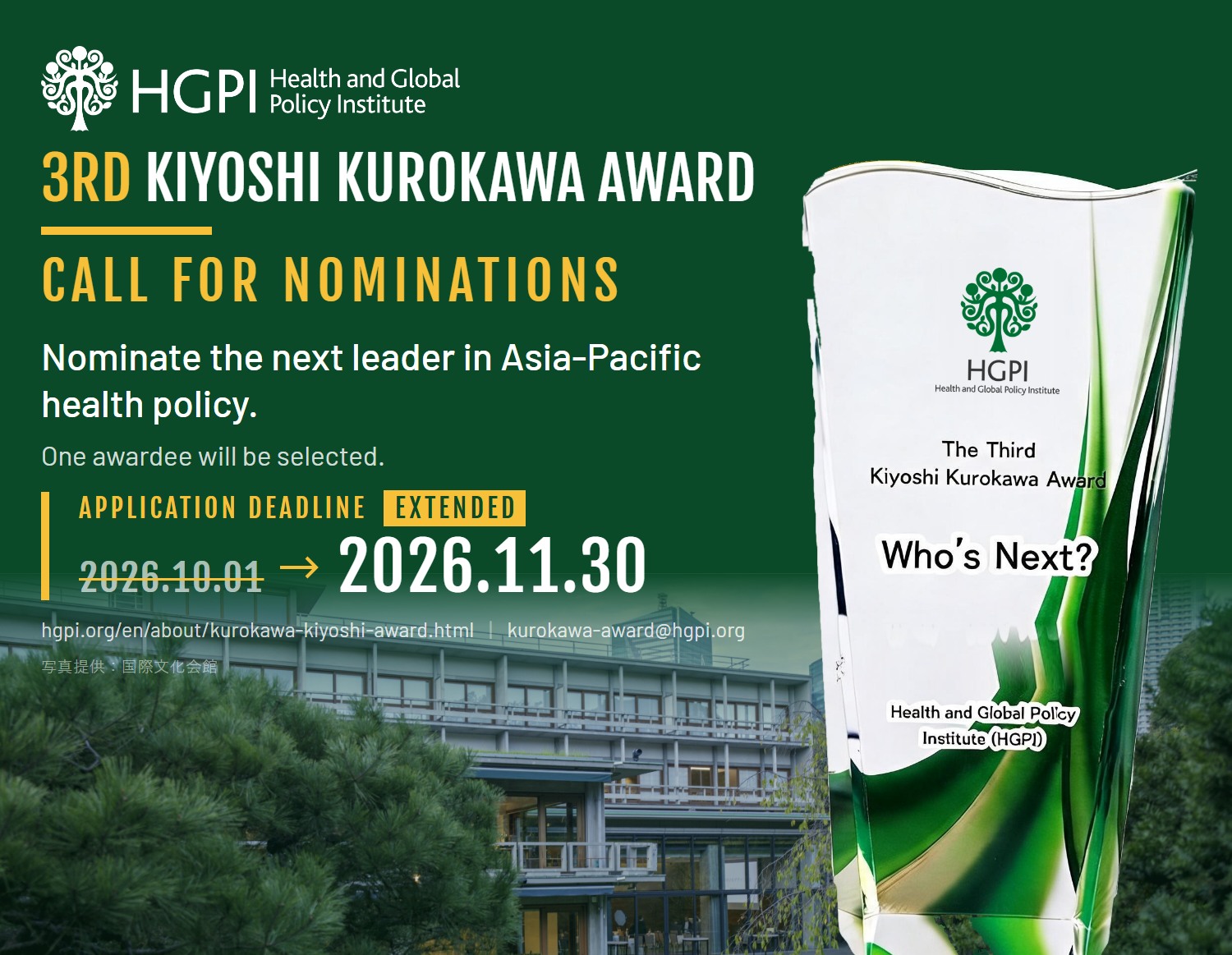
[Announcement] The 3rd Kiyoshi Kurokawa Award: Call for Nominations (Deadline: November 30, 2026)
-
2026-09-17
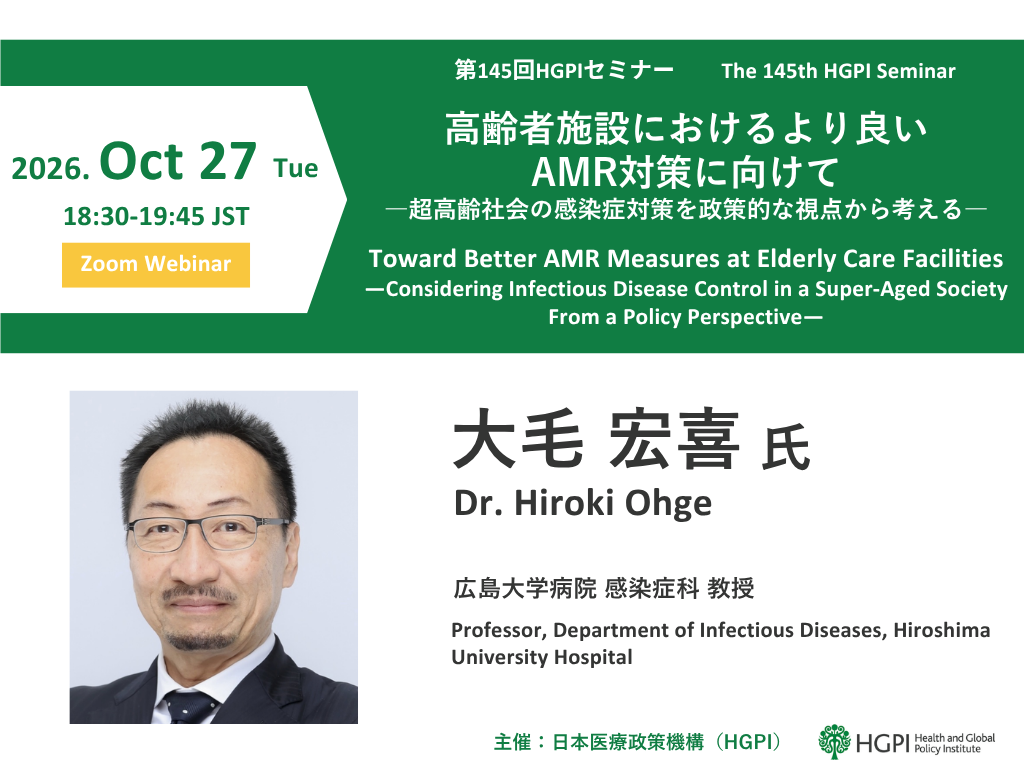
[Registration Open] (Webinar) The 145th HGPI Seminar “Toward Better AMR Measures at Elderly Care Facilities—Considering Infectious Disease Control in a Super-Aged Society From a Policy Perspective” (October 27, 2026)
-
2026-10-06
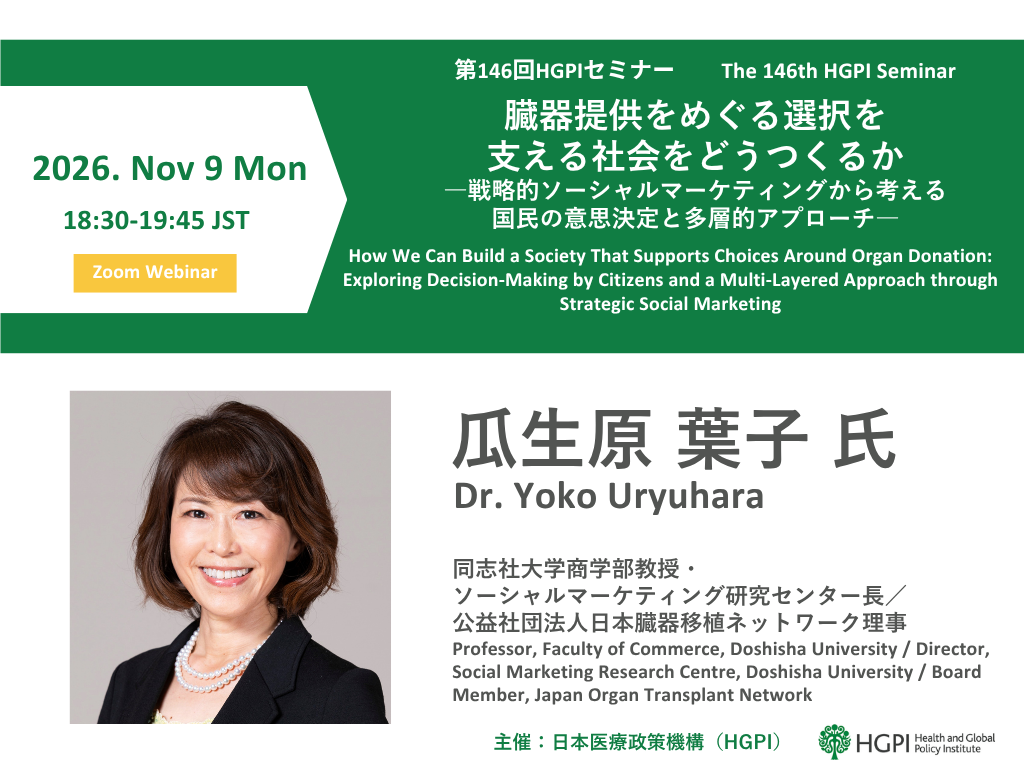
[Registration Open] (Webinar) The 146th HGPI Seminar “How We Can Build a Society That Supports Choices Around Organ Donation: Exploring Decision-Making by Citizens and a Multi-Layered Approach Through Strategic Social Marketing” (November 9, 2026)
-
2026-10-19
[HGPI Policy Column] (No.78) — From the Blood Disorders Project “Quality of Life in Long-Term Blood Cancer Care: Insights from Canada”